

AUTUMN NEWSLETTER-32- OCTOBER 2025
Welcome to another quarterly Newsletter from around the world and it is largely written by yourselves, the Vertue Owners.
Regular contributer Ben Deveson has sent some impressive photos of his Virtue racing amongst a collection of much larger boats which demonstrates that Vertues are no sluggards, even in light weather. Mark Anderson, who has recently bought the Ocean Vertue Kea, and has been refitting her, reports that she caused quite a stir at the Port Townsend Wooden Boat Show in September. From South Africa I’m delighted to report that Karen Cross’ new edition of the Vertue classic, ‘The Baby Boat’ is now available through Amazon worldwide. Back here in England I was very grateful for another day afloat this summer with the inimitable Matteo Richiardi aboard his beautiful Cheoy Lee built Mea, close sister-ship to Kea. Possibly the last of the Cheoy Lee Vertues, Phoenix has also just had a deep refit in California, so many thanks to her owner Ron Geisman for sending some impressive photos of his immaculate-looking boat. Meanwhile I’ve enjoyed putting together the latest episode of my own idiosyncratic look at how the design dynasty that included the Vertues might have developed in the actual design office of Jack Laurent Giles and Partners, on Quay Hill in Lymington. All my notes are conjectural, of course, and it would be very interesting to hear from anyone with more to add to this particular story. Audun Pedersen has added a wonderful new addition to the ongoing series loosely entitled ‘My Vertue and Me’. We can only marvel at the skill and tenacity of his wonderful project to take on and complete the project of creating one of the finest Vertues afloat, Patience of the Huon in Tasmania. 75 years ago, the launching of Wellow Maid brought to an equally satisfactory end the creation of one of the earliest Vertue self-build projects. Her photos grace the beginning and end of this Autumn Newsletter, which I hope everyone will enjoy.
Please keep the stories coming…………!
____________________
For starters here is some News of the steel Vertue Virtue, racing in the Dutch Classics, kindly sent in by her owner Ben Deveson:
“Thought you may like some photos from the Dutch classics regatta in Enkhuizen this year. We had a glorious five days of racing in three classes of classics, we were in with a group of 23 boats, ranging from dragons to old sixty’s racing yachts. I am delighted to say we did pretty well, excelling on the days with lighter wind, two days we finished 7th and overall we were 9th, finishing way in front of a lot of larger yachts; we were the second smallest in the whole fleet. We have also done well with the club racing with a third and a second in racing. I’ve finally got the hang of getting Virtue trimmed and up to speed for racing, has helped that I’ve stripped off the extra windage and weight for the races, and that I’ve had my extra large light weather genoa repaired, I have to sheet it from the spinnaker blocks!
I’ve had so much fun and success with it this year that I’m not thinking of selling anymore!
Kind regards, Ben Deveson”
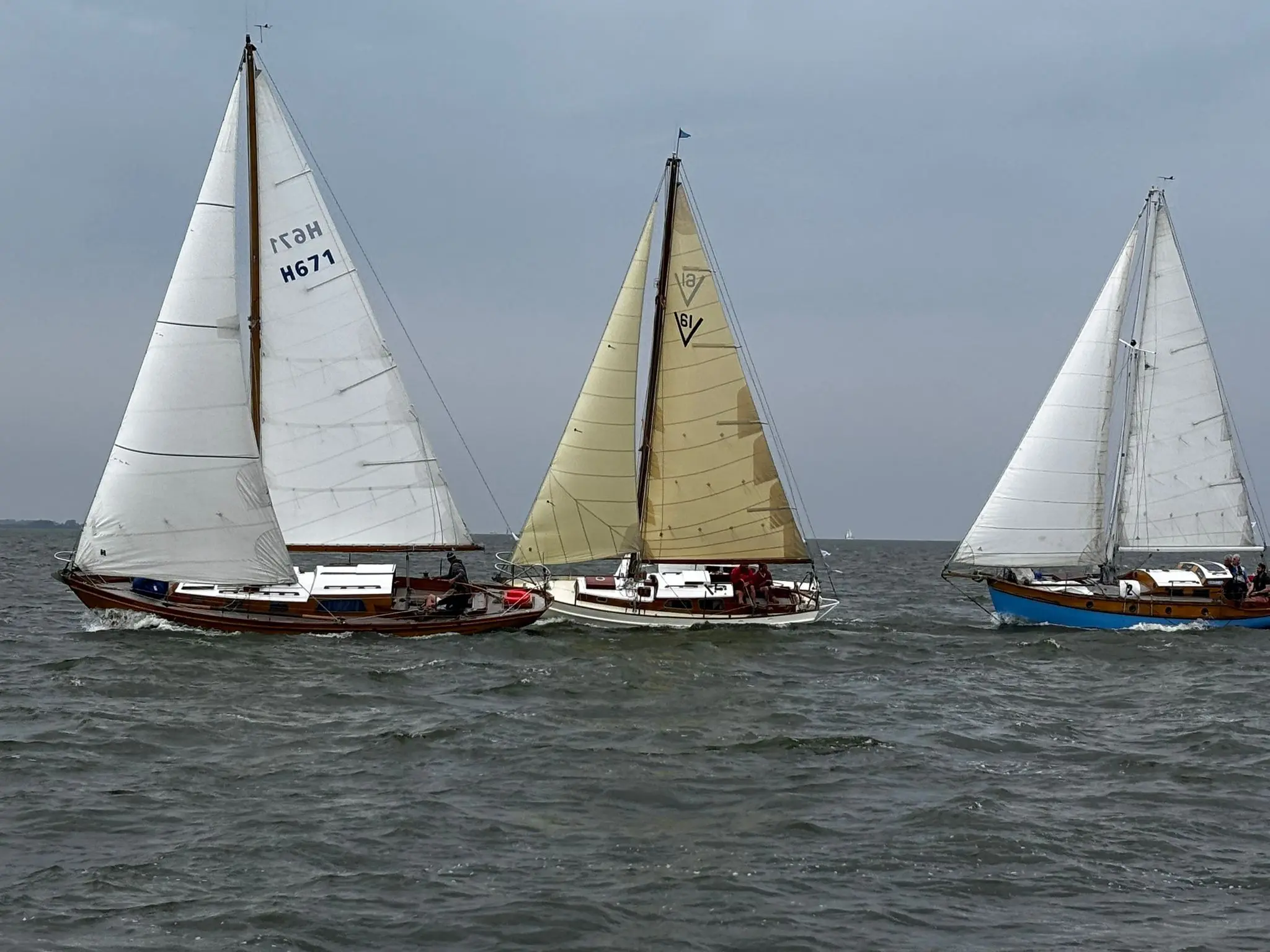
Virtue is mixing it with the big boys. Who says Vertues don’t race!

Virtue surrounded by racing boats, mostly half as long again as she is!
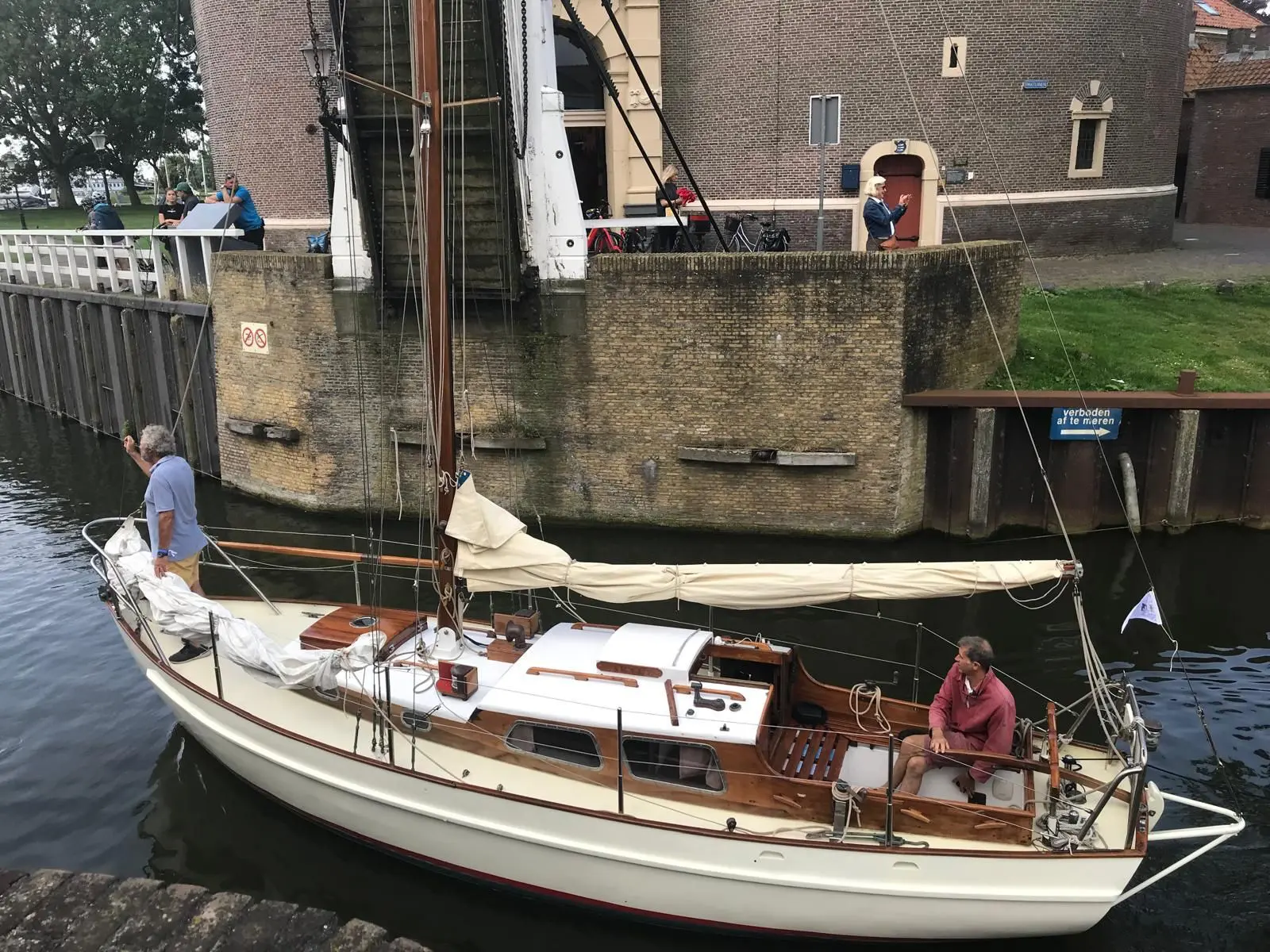
Well it is the Netherlands, after all! Virtue‘s distinctive steel hull and deck looks very trim, including all that beautifully varnished brightwork.
____________________
Port Townsend Wooden Boat Festival
Meanwhile, half-way across the world, the Ocean Vertue Kea has been making a splash at the Port Townsend Wooden Boat Festival.
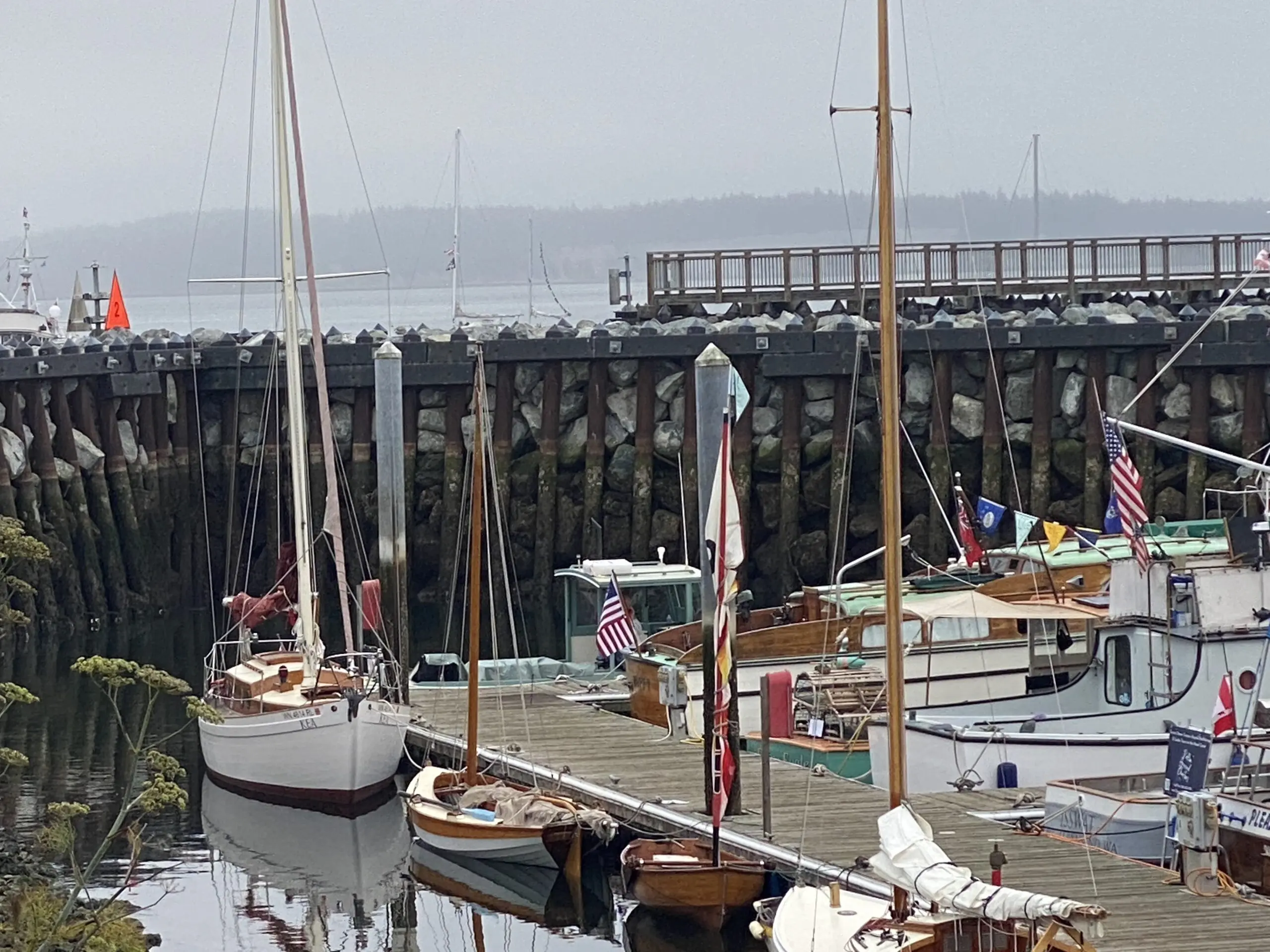
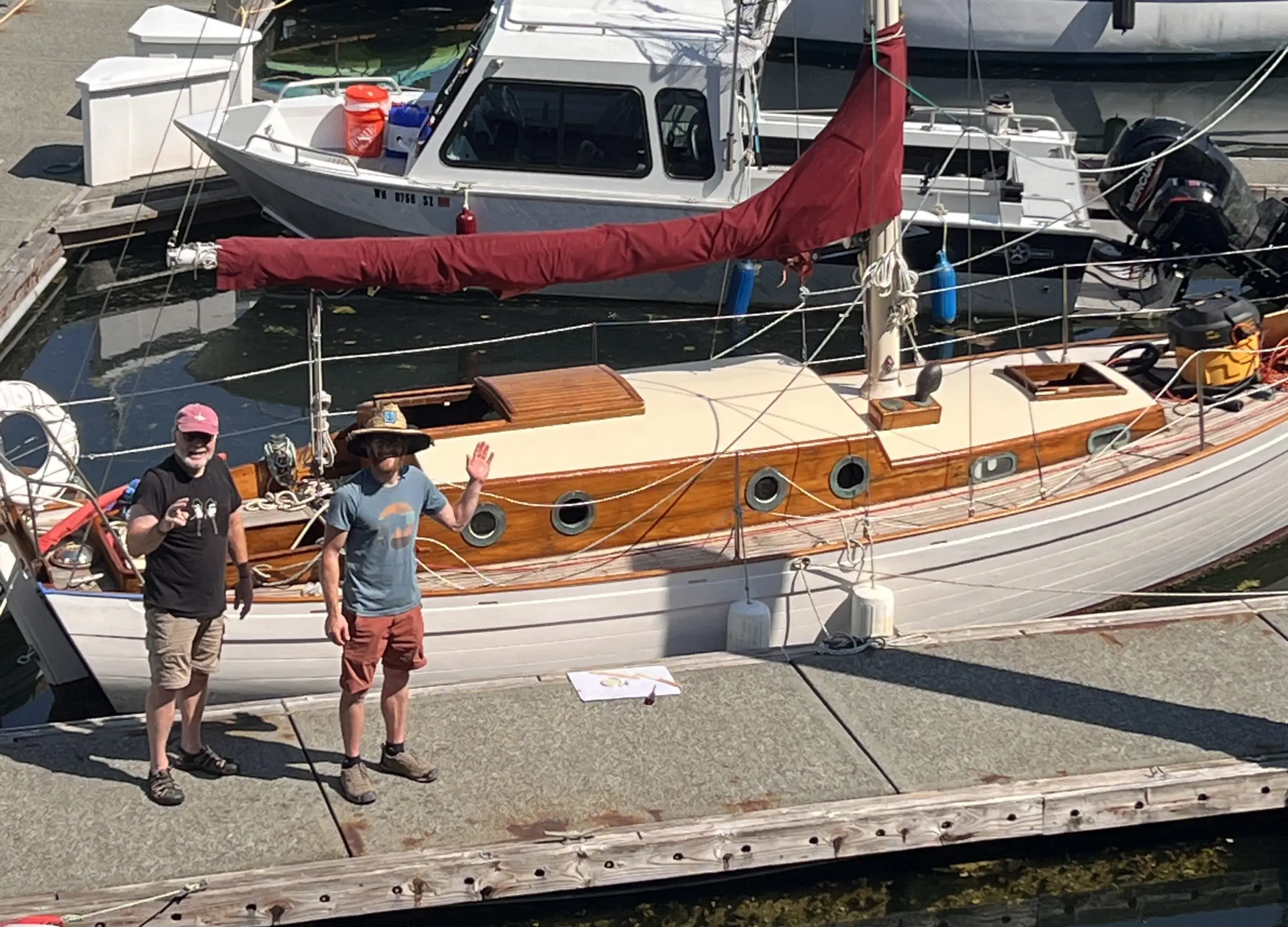
Her new owner, Mark Anderson on the left above, has kindly sent some photos of Kea displaying some of the immaculate workmanship of his celebrated boat. Mark was delighted to welcome ‘Vertue legend’ Bill Nance and his wife aboard Kea during the Festival for a yarn and to hear a first hand account of Cardinal Vertue‘s doubling of the Horn in 1965.
Kea is well-known in the Pacific northwest as well as being the heroine of Sam McKinney’s book called Sailing with Vancouver.
____________________
Talking of Vertue Sailing books, I am delighted to report that Karen Cross has completed the publication of an updated version of her best-seller. This new edition can now be bought through Amazon in the UK. Order it today; it’s a fascinating window into the realities of ocean cruising, and life ashore, before the complexities of the digital revolution.
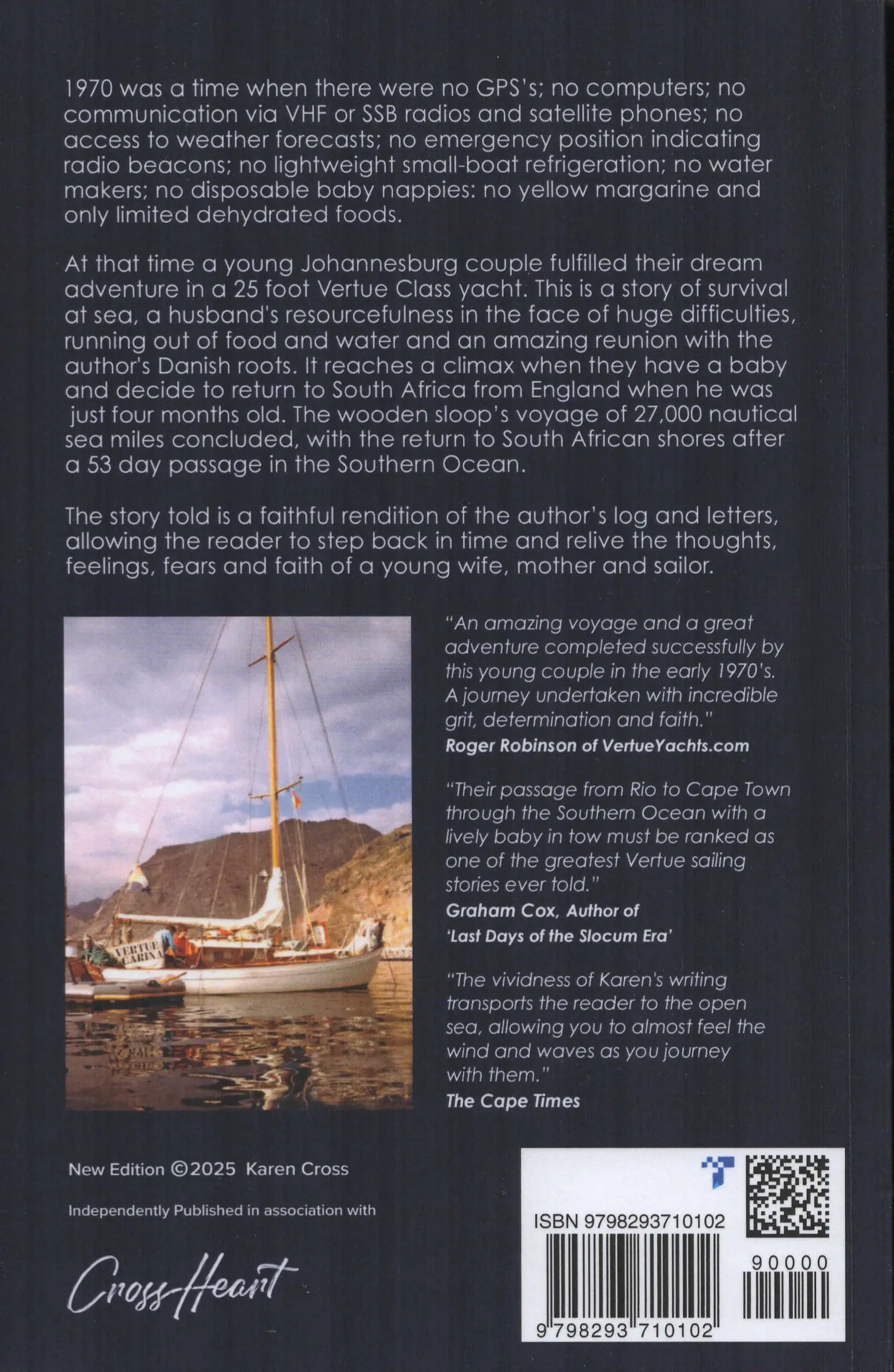
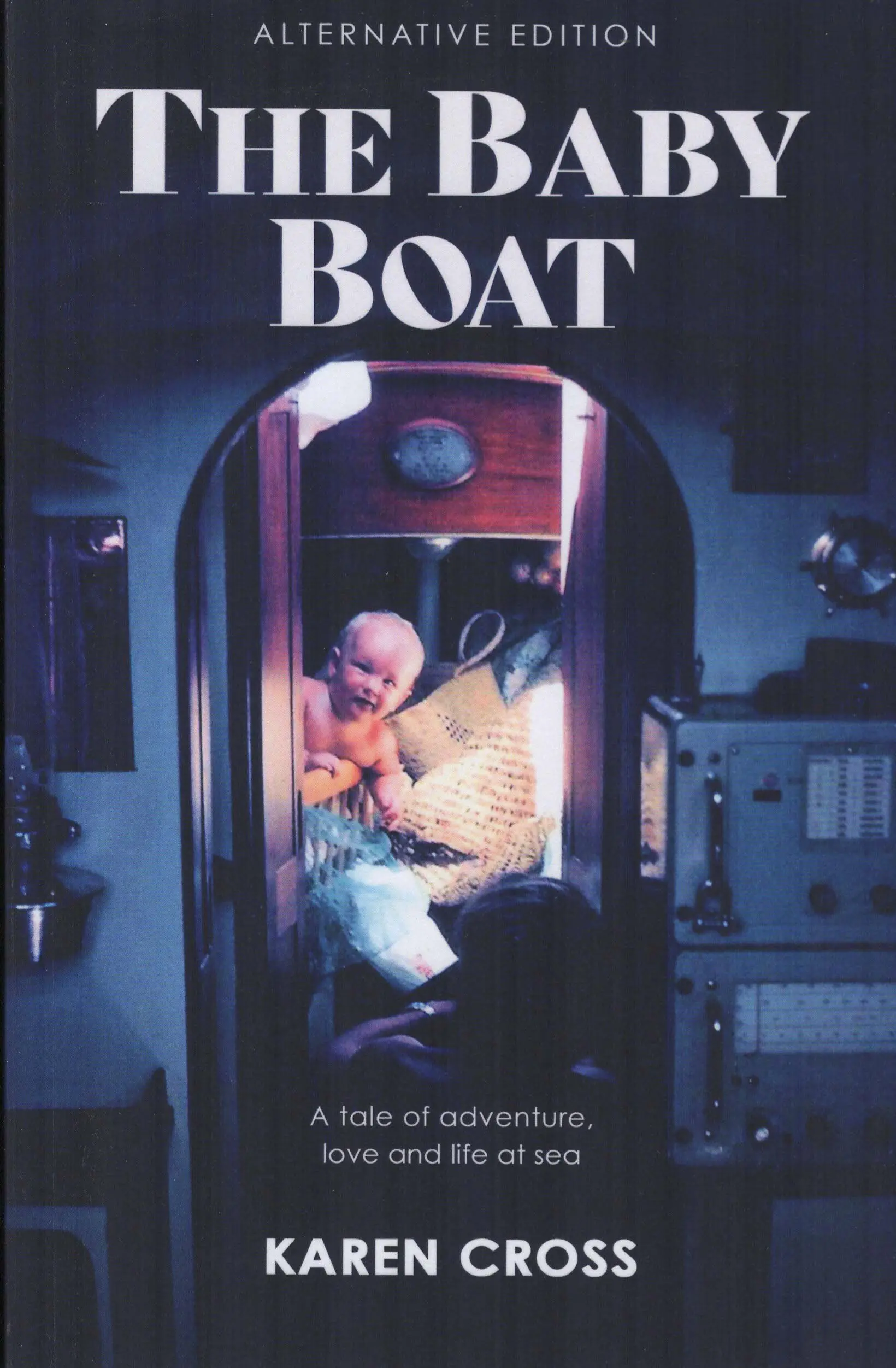
The link below will take you straight to Amazon to order the book in the UK.
https://.amazon.co.uk/dp/B0FJX8DDH
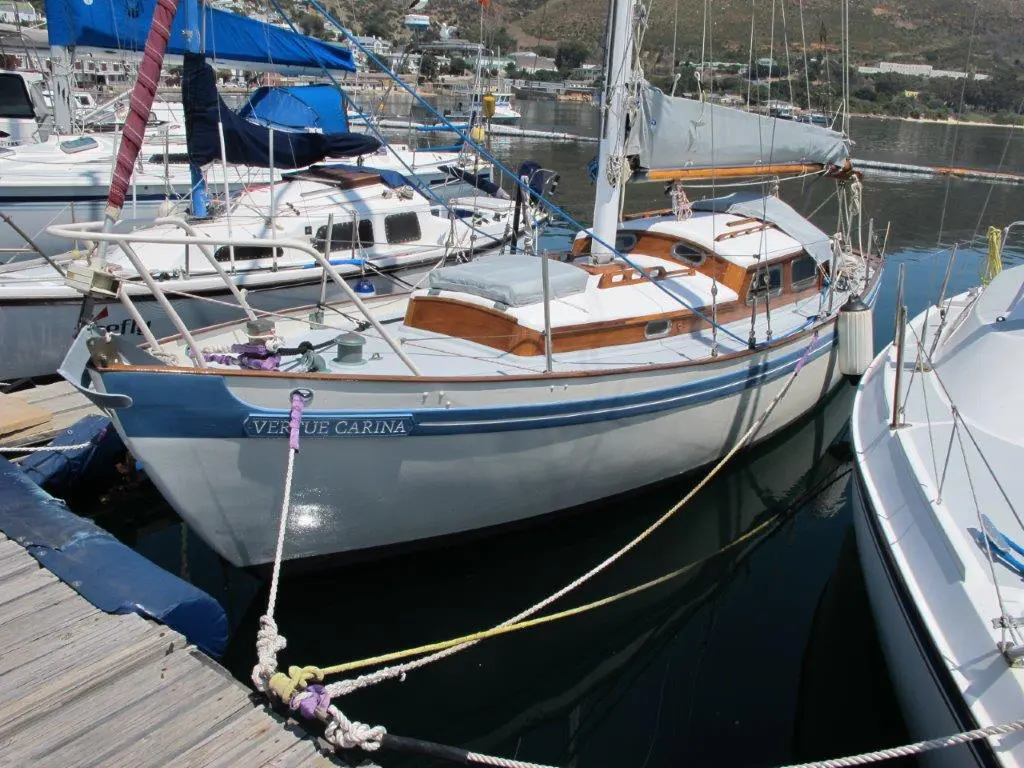
Here is the Baby Boat today:
____________________

Another Ocean Vertue, Mea, here in Devon this summer.
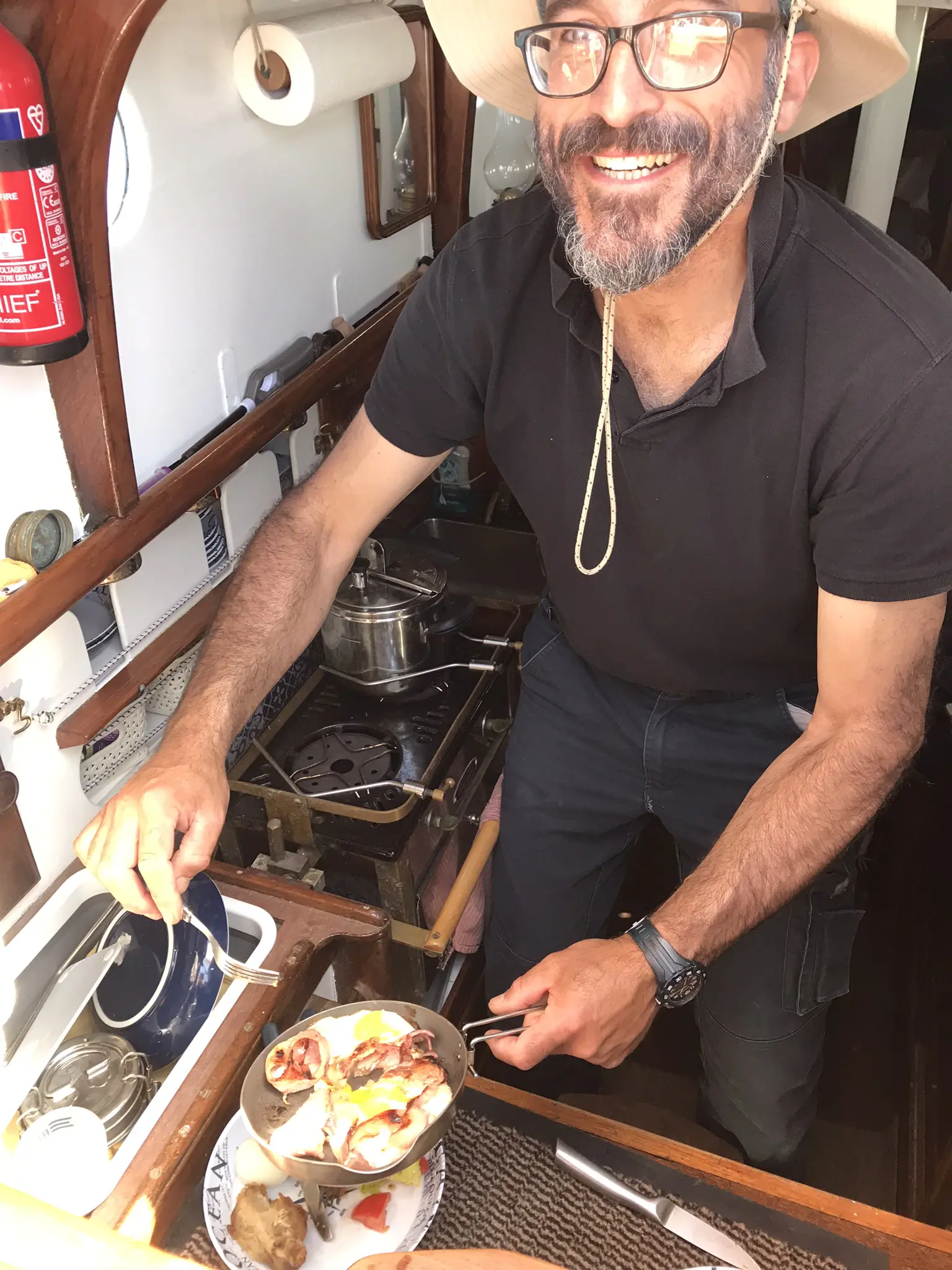
I don’t get out on the water much these days so when my good friend Matteo invited me to join him for the day, sailing round to Salcombe from Plymouth, I leapt at the chance. He even cooked us a splendid lunch of bacon and eggs!
Mea is a Cheoy Lee built boat and this little passage aboard her was a tiny part of Matteo’s annual cruise. This year he calmly circumnavigated his way, mostly single-handed, around the mainland of Britain via the Caledonian Canal, Irish Sea and up the Channel back to East Anglia.
_____________________
PHOENIX

Phoenix in California
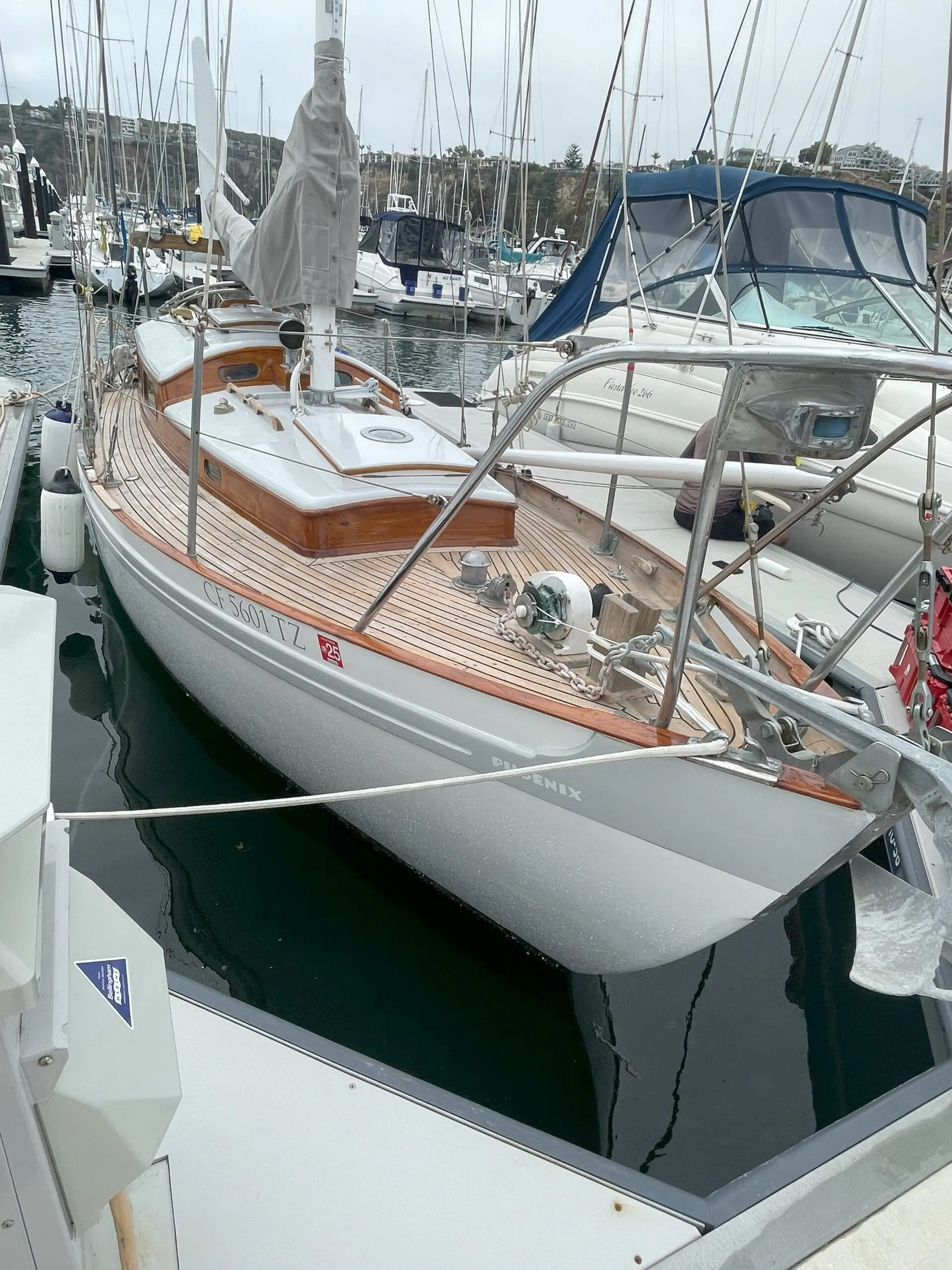
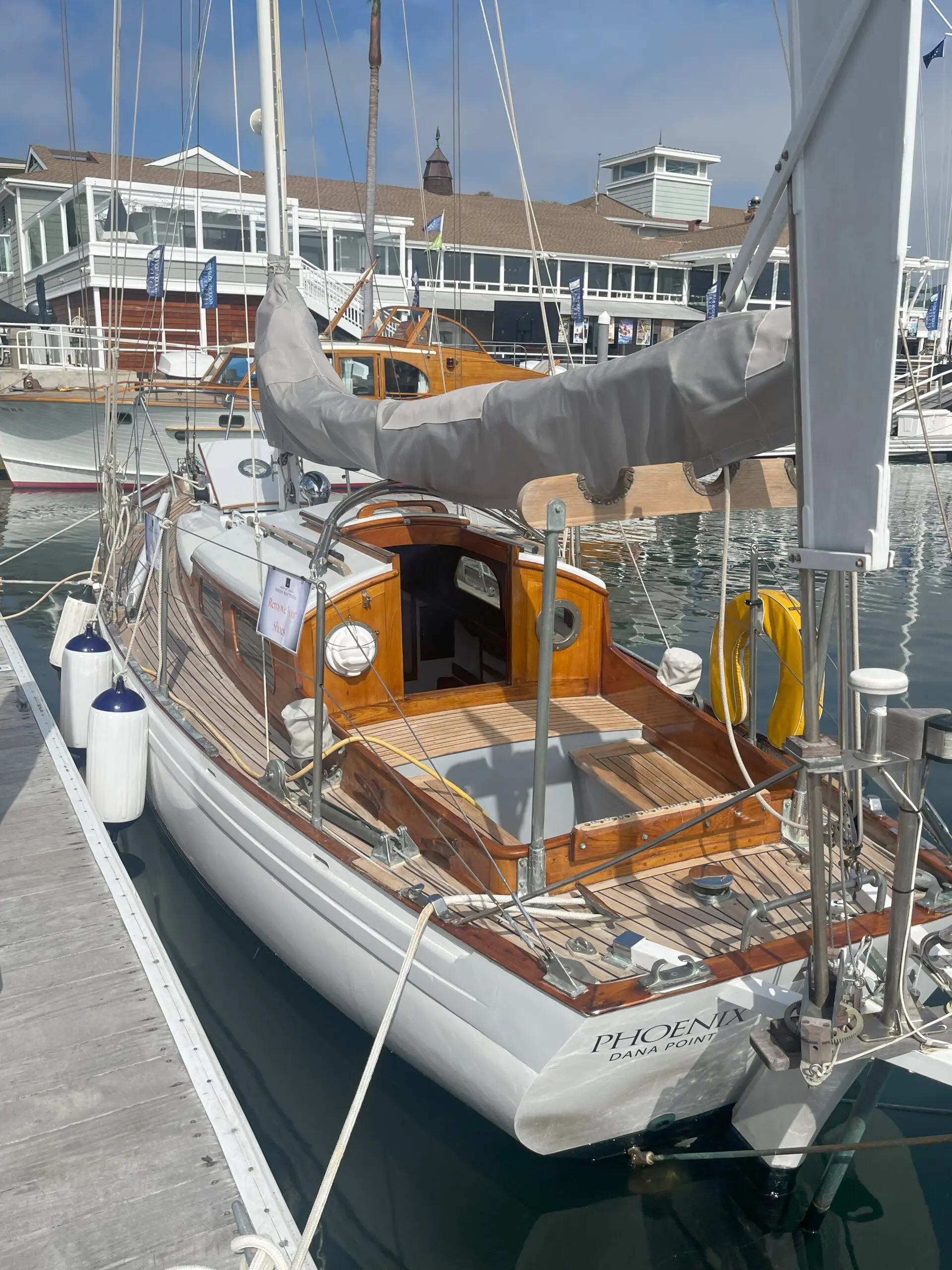
The story of one of the last of the Cheoy Lee built Vertues has long eluded me, but I recently heard from her owner Ron Geisman in California, who wrote to say that he had just completed a deep refit of Phoenix in Oceanside marina. I’m hoping to be able to write about more of her history in due course. She wasn’t built until 1967. This was several years after the last of the Cheoy Lee Vertues were delivered to the UK, following the sales campaign by Denis Hoolahan with his Salterns Yacht Agency.
____________________
The Vertue Design Dynasty: Part 7
The Wanderer Class.
The Vertue Hoitak’s cabin seemed rather crowded as I sat next to my father on the port settee. Opposite us Eric Hiscock and Humphrey Barton were discussing the quality of the gleaming teak joinery and David Smithells from the importers in Chichester, sat on the companionway steps, beaming with delight. It was January 1963 at the Earls Court Boat Show; Wanderer III was afloat in the Pool, and Hoitak too was causing quite a stir. She had just been shipped to the London docks from the Cheoy Lee shipyard in Hong Kong by Denis Hoolahan for my father, as the first of a series of Vertues for the British market. As a result of Hoitak’s appearance at the Boat Show, and subsequent press publicity, no less than ten sister-ships were built in Hong Kong for the British market that year.
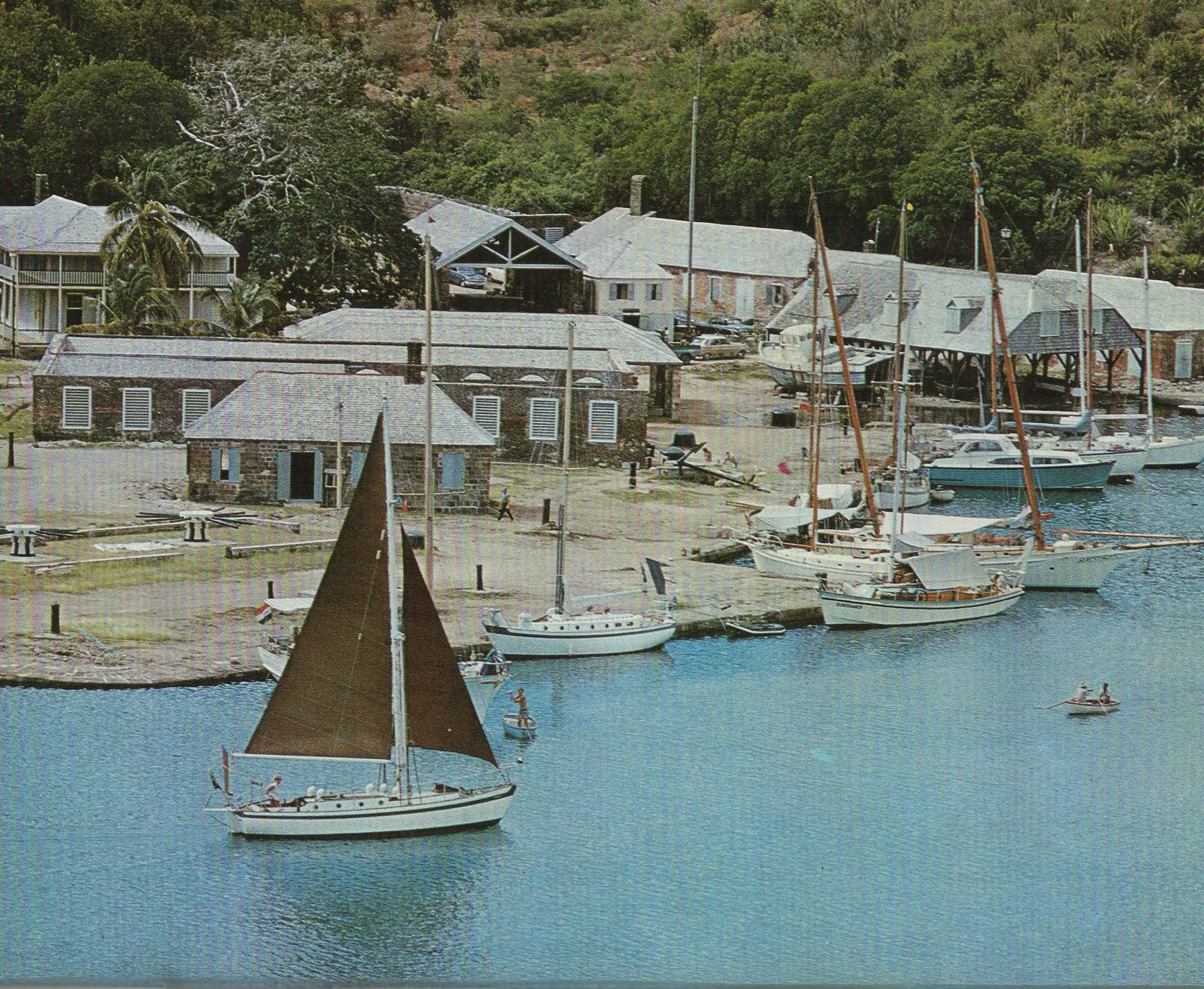
One of Eric Hiscock’s photographs of Wanderer III, as Susan sails her single-handed around the confines of English Harbour, and past the Wanderer Class Widgee moored alongside Nelsons Dockyard in Antigua in 1966.
Hoitak’s appearance confirmed the incredibly good value these teak-built yachts from Hong Kong provided, but the one criticism that occurred time and again, was that the accommodation was rather too cramped for more than two or three people. After the Show, encouraged by the large number of orders for more Vertues, Hoolahan approached Laurent Giles and Partners Ltd. for a design for a larger boat; and he didn’t need to look far for a name for the new class. Wanderer III had become one of the most famous boats in the world, so her name was the ideal choice for a marketing man like Hoolahan. Within a year the Salterns Yacht Agency brochure offered both Vertue and Wanderer class yachts, ‘in Burma Teak’, for sale at £3,725 and £6,400 ‘landed UK’.
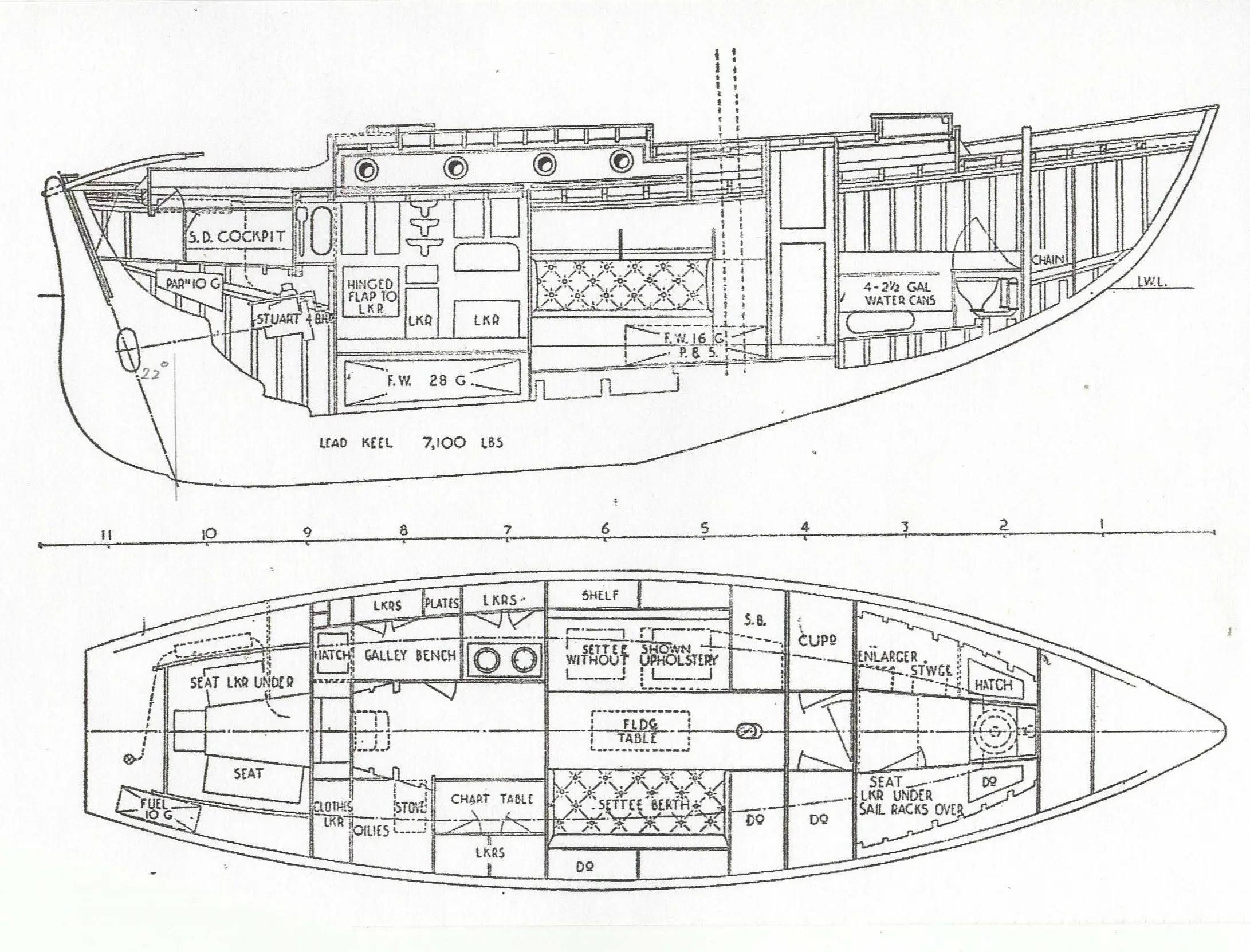
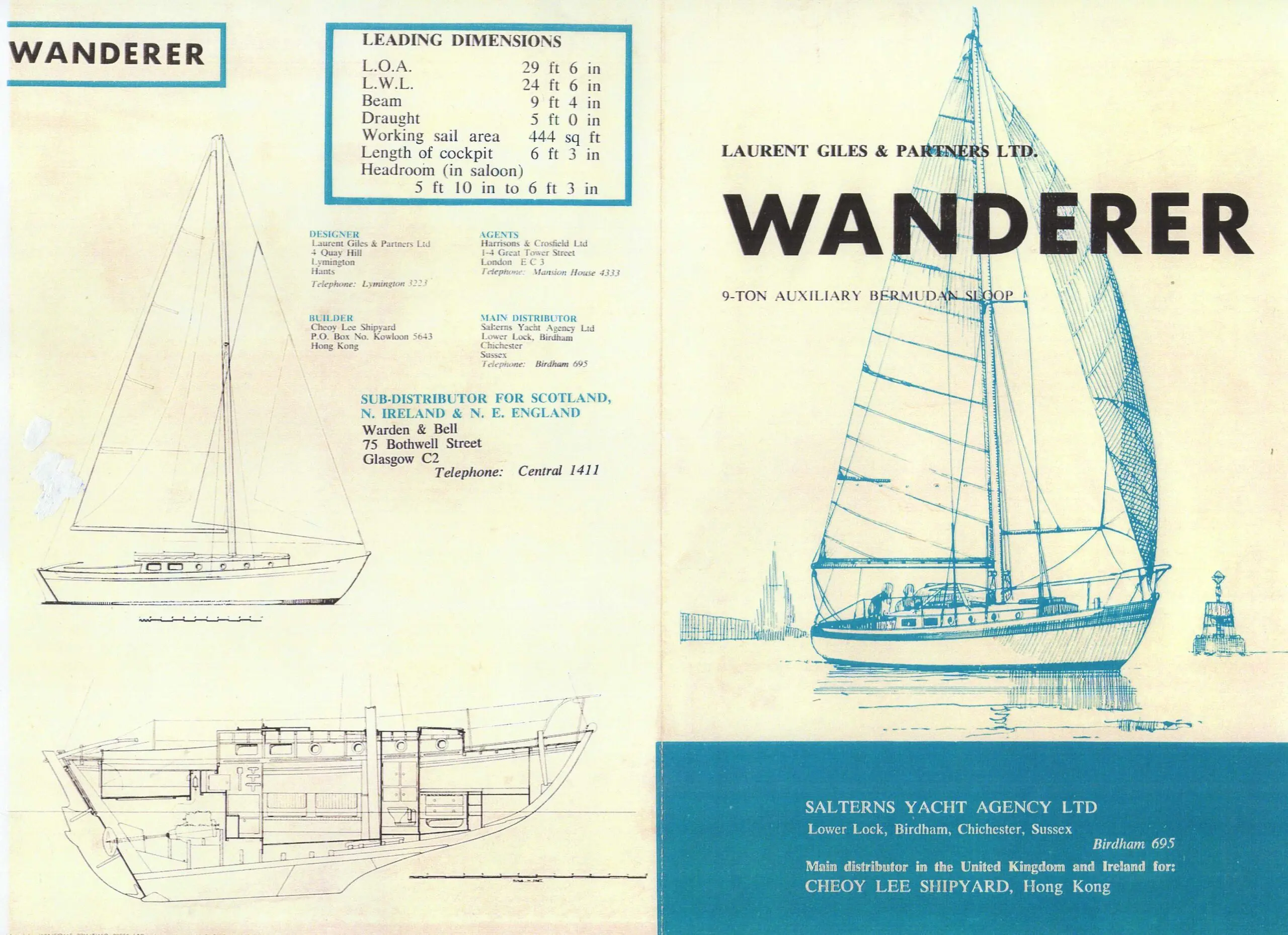
Wanderer III general arrangement layout.
Working backwards from the actual design of the boats, it is easy to see what the brief to the Giles Partnership must have been. Compared with the Vertue she had to have plenty of space and headroom throughout; at least four berths, a separate heads compartment, larger cockpit and a simpler rig; and all this had to be within an overall length of 30’.
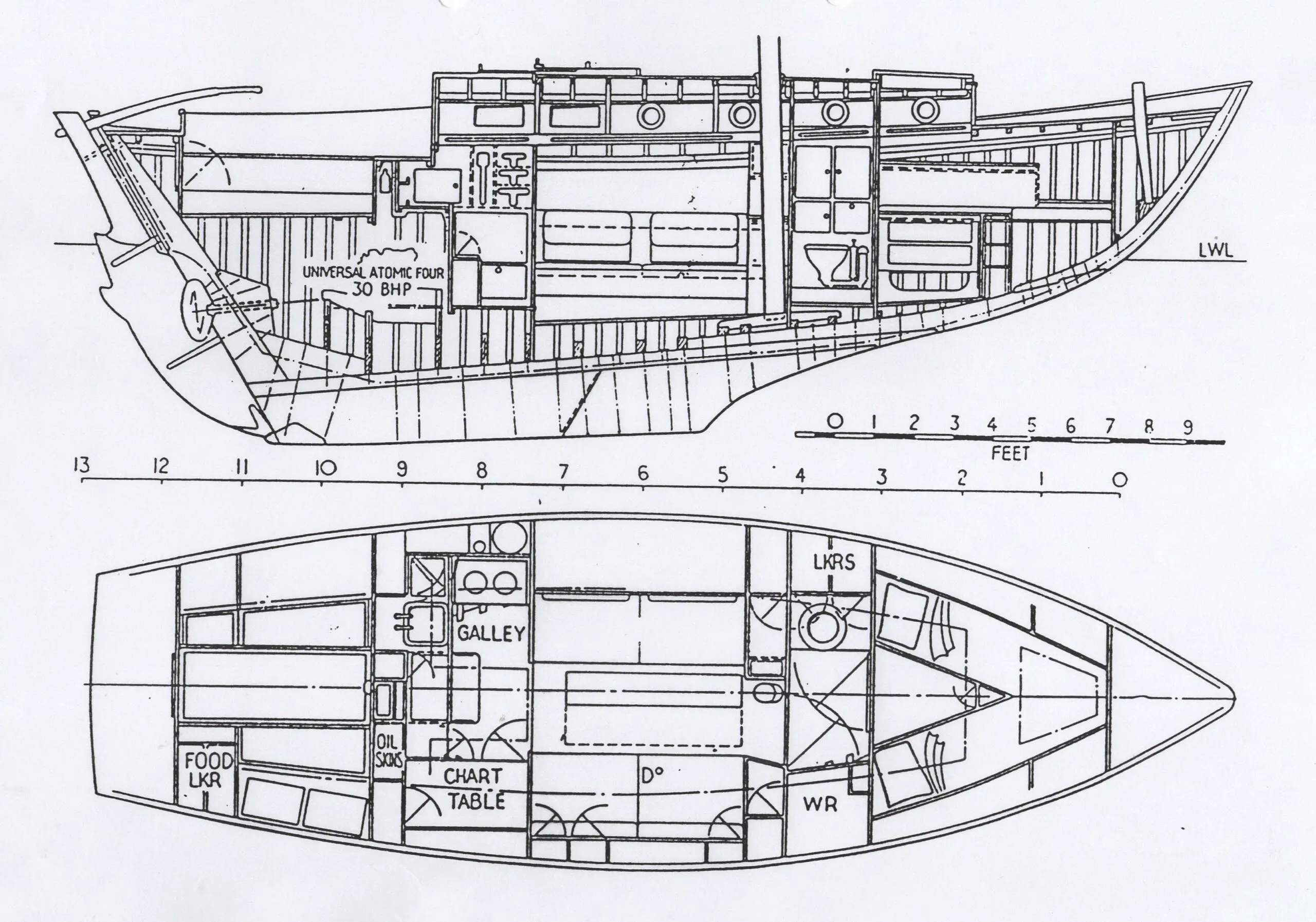
Wanderer Class general arrangement drawings.
The reality of the resulting spaciousness is astonishing. Since the conception of Wanderer III in 1951, based as she was on the design of the ‘big Vertue’ Kalliste, a number of major design developments in cruising boat hull form had taken place. Perhaps the greatest of these is the fact that much more of the hull is actually above the water, even though the difference in freeboard from the earlier design is only a few inches. There is also almost a foot more beam and both ends of the boat have been cut away under water. The stern post rake is ten degrees greater, cutting wetted surface area, and the forefoot also follows the cutaway profile of the RNSA 24’s and the Normandy’s. There followed some debate in the yachting press about whether such a profile would lead to ‘wildness’ on the helm, and an inability to heave-to effectively, but neither fear was ever experienced by those that made a number of ocean passages with their new Wanderers.
Of course such design developments came at a price, and to some the bulkier shape and flatter sheerline of the hull were less attractive. In particular the plain, continuous coachroof profile lacked the aesthetic appeal of Wanderer III’s stepped version. This was clearly in keeping with contemporary design trends where such details were discarded in favour of ease of construction and the appearance of greater headroom down below. I confess to a feeling of sadness that this trend has continued to this day.
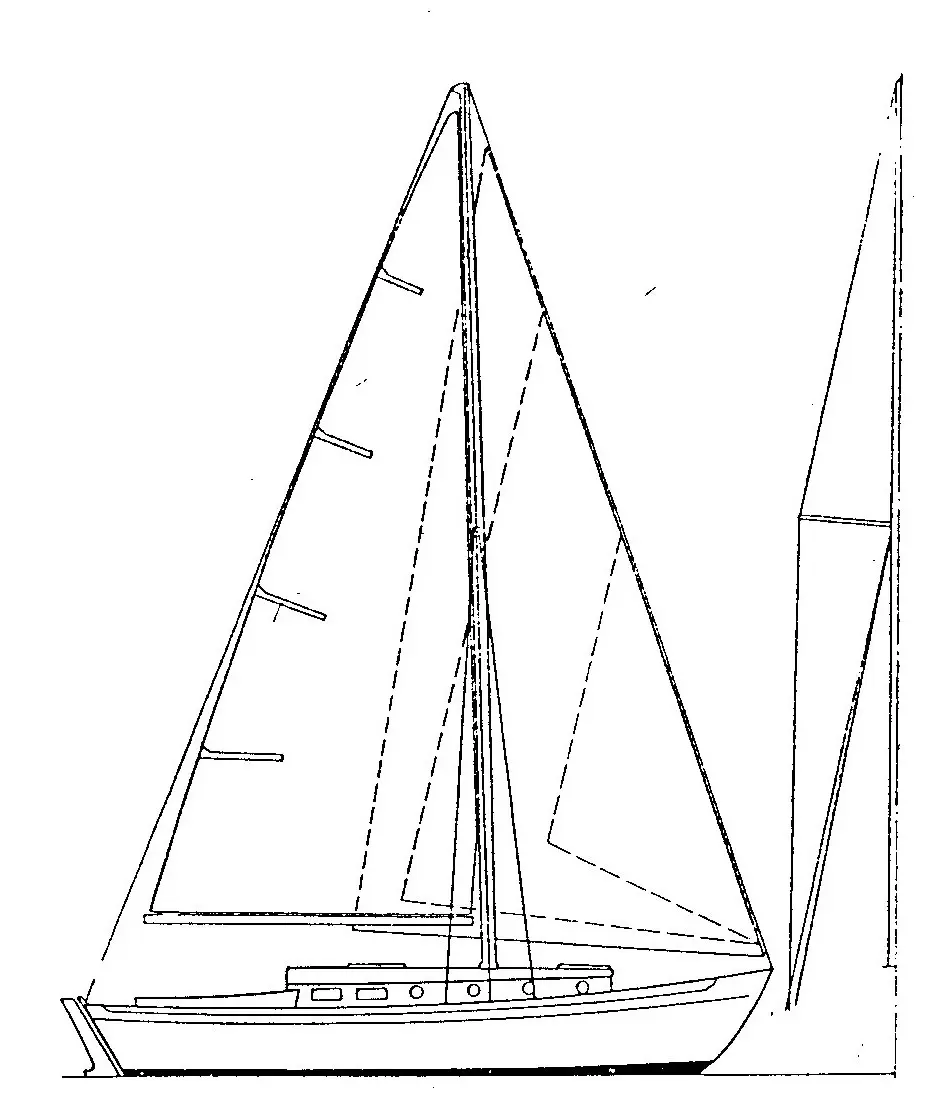
Wanderer Class simplistic sail plan profile.
The rig was ‘brought up to date’ and ‘simplified’. Well, yes, but at what cost? Just because it was now quite common for cruising yachts to follow the racing trend of setting large, masthead genoa jibs for windward performance, did it also mean that this was appropriate for cruising yachts too? I’m a great admirer of the flexibility and strength of the standard Giles masthead sloop rig as found on Vertues and several other contemporary designs, and have always found the simplified version less satisfactory in use. But the single-spreader, single backstays to the quarters, and single forestay were chosen for the new Wanderer Class. Perhaps it was partly chosen for economy, in an effort to keep the price down?
When Wanderer III set off in 1965 on her next adventure to provide Eric with copy for another book, she came across two of the new Wanderer’s. They met David Guthrie aboard Widgee W7 in Funchal and again in English Harbour. Then on their way back east the following year they moored just astern of Jock Hardwicke’s Jomada, W9, in St.Georges, Bermuda. I owned her briefly, many years later, after buying her from Jock and found her to be a delight to sail, wonderfully spacious on deck and below, and significantly faster than the Vertue.

Jomada
As far as I know, no one has tried to put together a coherent record of this class in any detail; until now. Apart from all the usual sources I have kept copies of any information on the class I’ve noticed since their inception and conclude that about 30 boats may have been built. W1, Eastern Wanderer was the first to be built in Kowloon by Cheoy Lee, and my guess is that they might have built as many as 20 altogether. The Ibbtc school built a couple, Arthur Holt launched Mary Jo in 1980, and even Elkins, that most prolific builder of the Vertues, built Klompen in 1965, the same year that Colne Marine completed Widgee for David Guthrie.
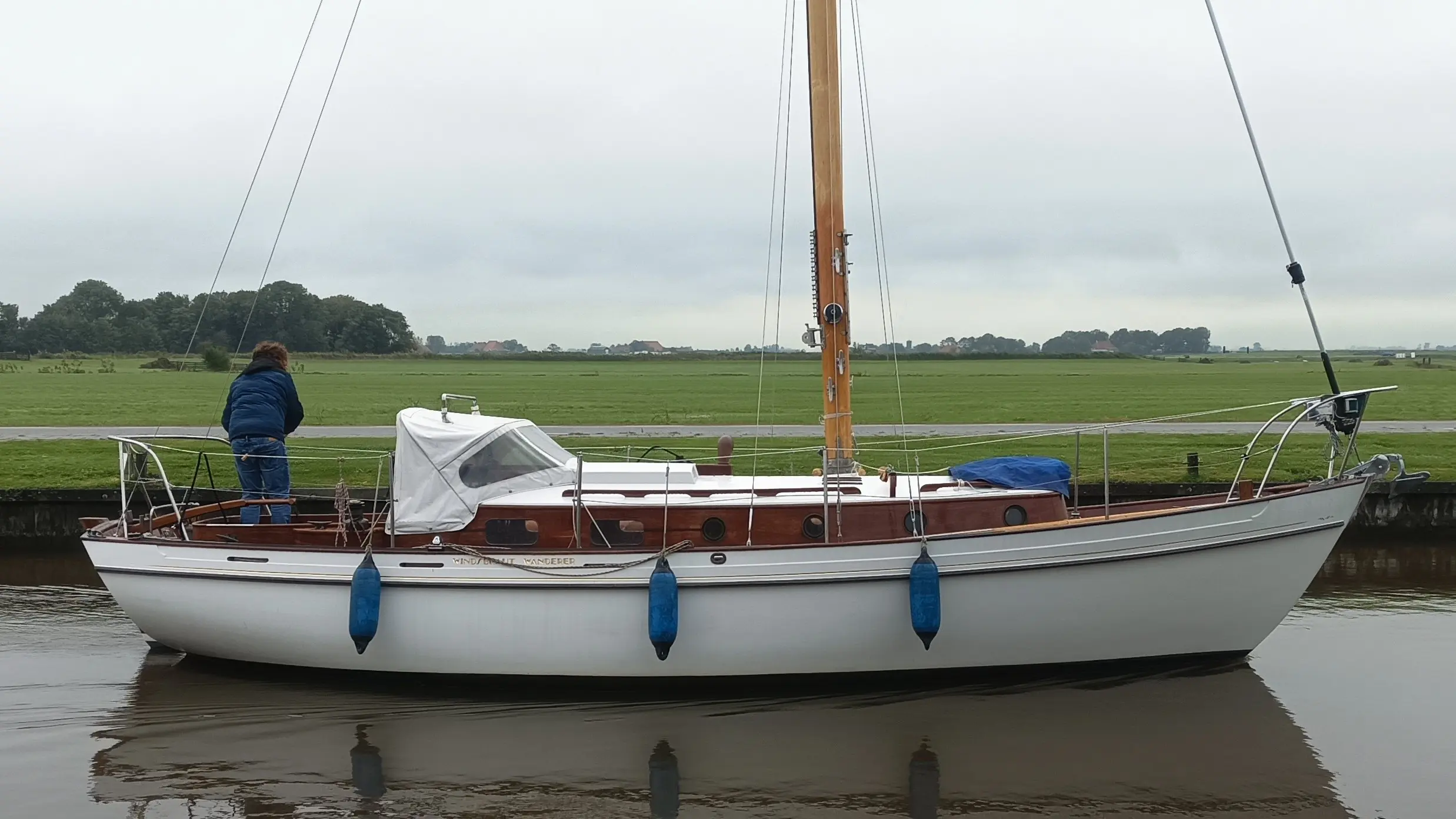
Probably the most immaculate example of the class is Windsbraut Wanderer W19, and I am indebted to her owner, Rudolf Grimm, for keeping me up to date with her fortunes. Built in 1968 by the well-regarded Hennigson & Steckmart yard in Kampen, Germany, she was acquired by Rudolf in 2020 and, characteristically, he gave her a seriously ‘deep’ refit. From the photos it is quite believable that she was subsequently given ten coats each of white enamel and varnish! Ever the perfectionist, Rudolf has now given her a new 3 cylinder Yanmar auxiliary which is much lighter than the previous engine, and has improved her trim.

Windsbraut Wanderer in frame in Germany, 1968.
I hope this brief description of the Wanderer Class will help to dispel the myth that the actual design of these boats owes much to the design of the legendary Wanderer III. They are roughly the same length and were designed by the same practice, but they have quite a different hull form, a different rig, profile, displacement, layout and appearance…. But they do share that magical name, thanks to their conception when ‘III’ was at the height of her fame. Nonetheless I think they have earned their place in the Laurent Giles ‘Design Dynasty’ to which the Vertues and their cousins may be seen to belong.
____________________
PATIENCE OF THE HUON
“My Vertue and Me” Or ‘It can take 39 years of Patience to create a Vertue’ By Audun Pedersen
My connection with what has become V153 began with my purchase of an incomplete hull in 2002. I had seen a little ad in the classifieds of our local paper: “Vertue hull for sale $7,000”. There was no more detail than that, but it was enough. I was familiar with the Vertue; the phone contact number indicated someone not too far away, so I took the twenty minute drive down the highway, found the shed that I had passed hundreds of times before and took my first look at a hull that had obviously been beautifully built. Planks were Afrormosia, (Pericopsis Elata) a West African hardwood not dissimilar to Teak. Frames were Spotted Gum (Eucalyptus Maculata); an Australian hardwood widely used in boatbuilding due to its stability, durability and workability. Stem, keel and deadwood were Grey Ironbark (Eucalyptus Paniculata), a dense, high strength, durable Australian timber traditionally used for major structural members in boatbuilding. Planks were copper fastened to frames. There was perfect symmetry port side to starboard; it was robust and had been built thus far with knowledge and care. However, it was obvious that no work had taken place on her for quite some time.
As it turned out, I was the third owner. The keel was laid circa 1970, followed by the major part of the framing and planking. The incomplete hull was then sold five years later to owner number two, who completed planking the hull and carried out some work to the deck structure. Copper fastenings had largely been plugged, but the planks had not yet been faired, and the hull was uncaulked. Business pressures intervened, as it sometimes does, and little work was done for the next many years. He saw the project was unlikely to be completed by him, and with heavy heart put it on the market in 2002. I purchased her a short time thereafter. With another seven years before she was launched, total construction time was 39 years. This may not be a record, but it must be close. The Laurent Giles Company has records of the purchase of the plans in 1970. Their records indicate that the previous longest build period for a Vertue was twenty five years. No doubt there are other yachts that have taken a very long time to build, but which were nonetheless eventually completed. And many that haven’t been.
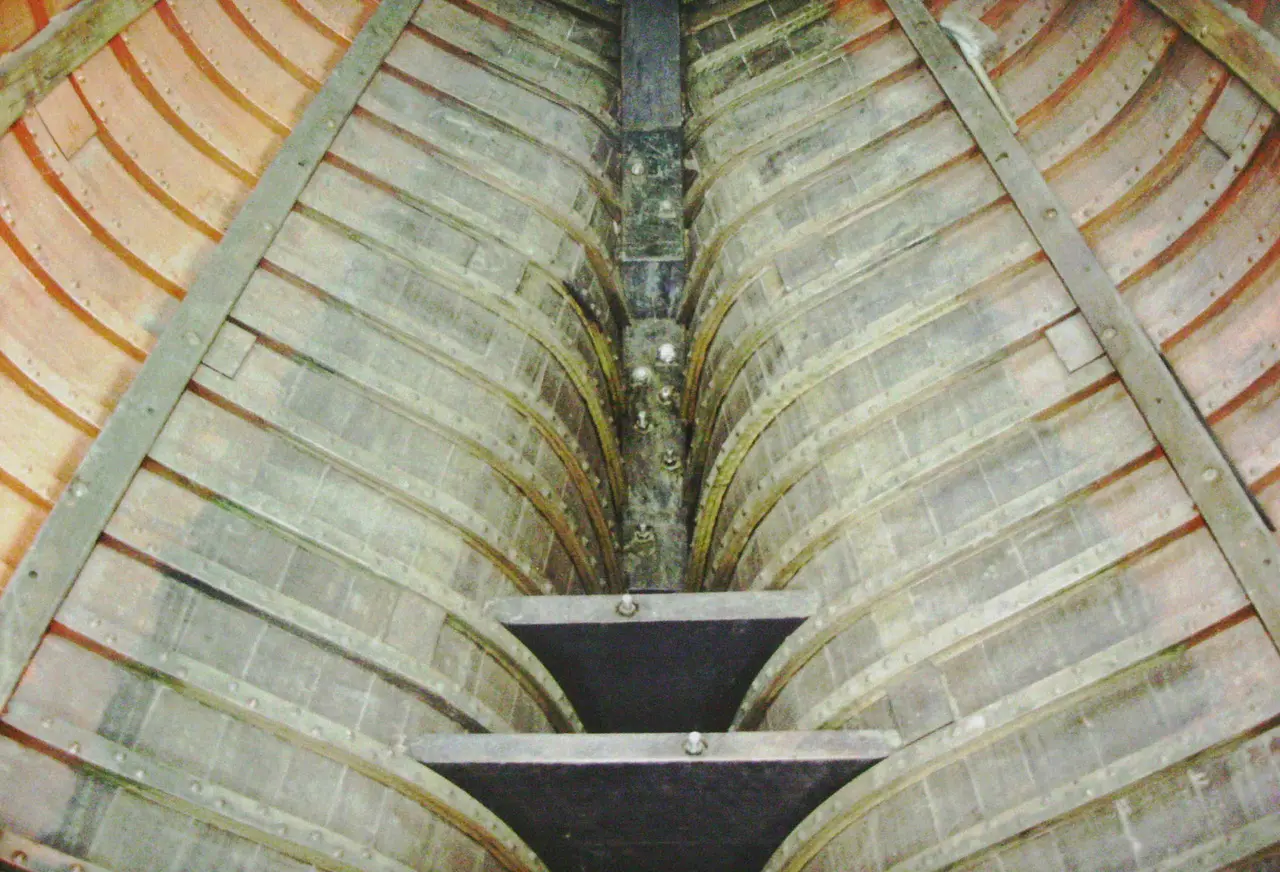
With the assistance of a low loader, a large crane, a small crew of men and what seemed at the time to be large sums of money (it’s amazing what a yacht building project does to your perception of what constitutes large sums of money), she found her way into her new home, a disused milk processing factory in my local town of Trafalgar in Gippsland, Victoria. It was a building of solid brick construction with tiled floor, fully reticulated with services including electricity, gas and compressed air. It was well lit, with large windows and it was tall enough to fully rig the boat on completion. It was three minutes from home. If there was a better place to build a boat, I can’t image what it would be.
This project had started with five active years of hull building, followed by twenty five or so very quiet years, another quiet year under new ownership (mine), then six years of focused weekend work, the last two working with a friend who added good company to the building process, and great woodworking skills to the project. The tools became sharper, the coffee got better, and the project at hand even more enjoyable.
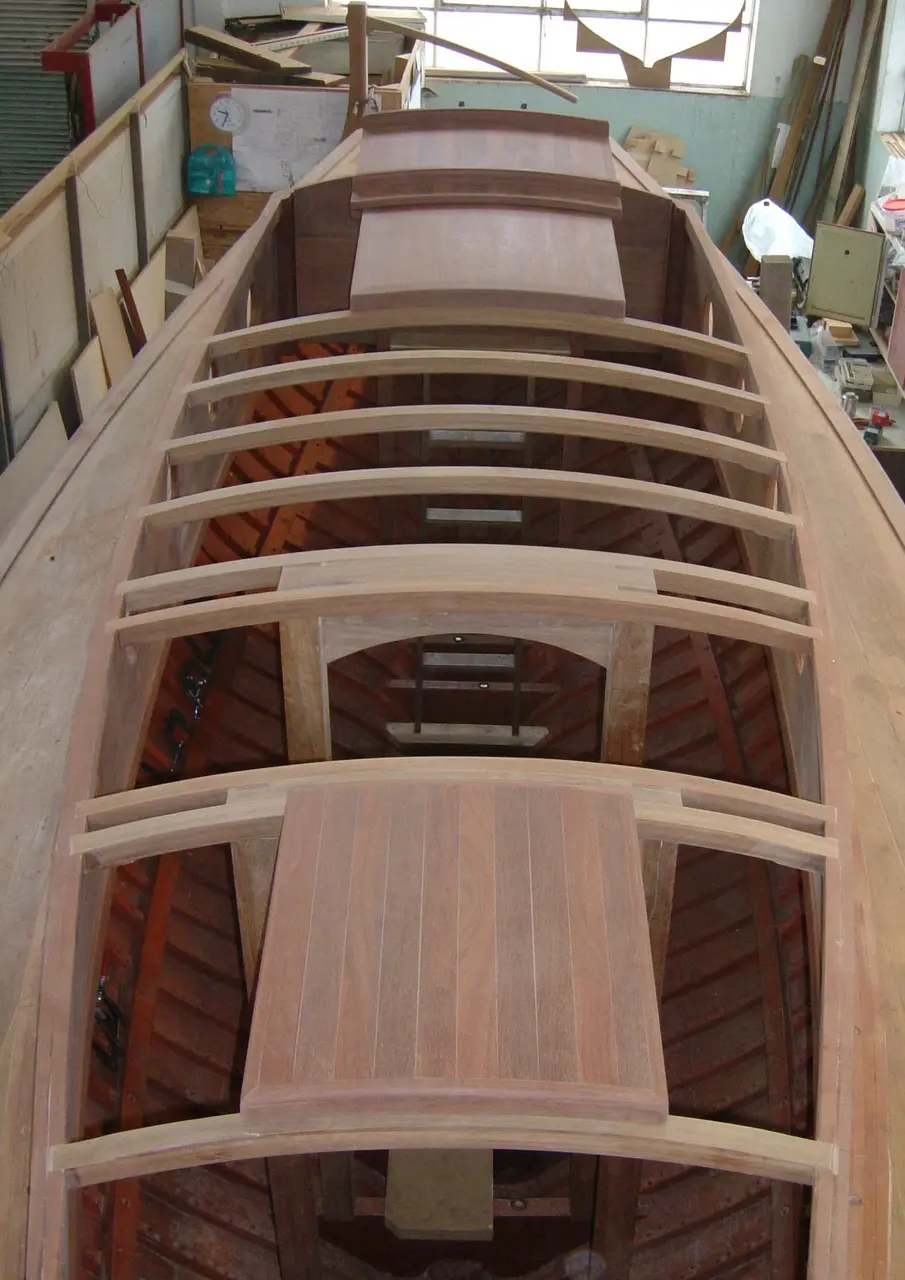
Even though the task of constructing the hull had been done, in my estimation a daunting task remained. In spite of my previous (limited) experience, each task is carried out for the first time, and the learning curve is steep. A friend and fellow boat builder told me that building a wooden boat, particularly for an amateur, is 80% sanding. Bud McIntosh, boatbuilder and author, of whom more later, stated that the idea in boatbuilding is to achieve a fair surface, not just a smooth surface, as “any apprentice painter can achieve that, given enough sandpaper”. He also advised (slightly paraphrased) to have “a pointy stick at hand, to use on anyone who approaches with a power sander”. Notwithstanding Bud’s excellent advice, I used both power sander and “enough sandpaper”. I alternated tedious tasks, including sanding, with the more rewarding tasks of woodworking, so that it was always interesting, always enjoyable. A rudder and tiller was completed long before the cabin trunk had been started. A drop-leaf table was sitting complete for three years, as were main and forward hatches. Word got around that something interesting was happening in the old milk factory, and interested, (and interesting) visitors would call in to check out progress. Some brought “stuff” they thought might be of some use. One acquaintance brought a pair of old paint encrusted opening port lights out off a 1930 fishing boat as well as a copy of Humphrey Barton’s book “VXXXV”. The bronze port lights polished up beautifully, and look great, with added provenance to complement a boat forty years in the making. A builder friend brought a can of red lead paint. “Great for boats mate, and hard to get!” he said. Red lead??? But he was right – great for boats, and hard to get.
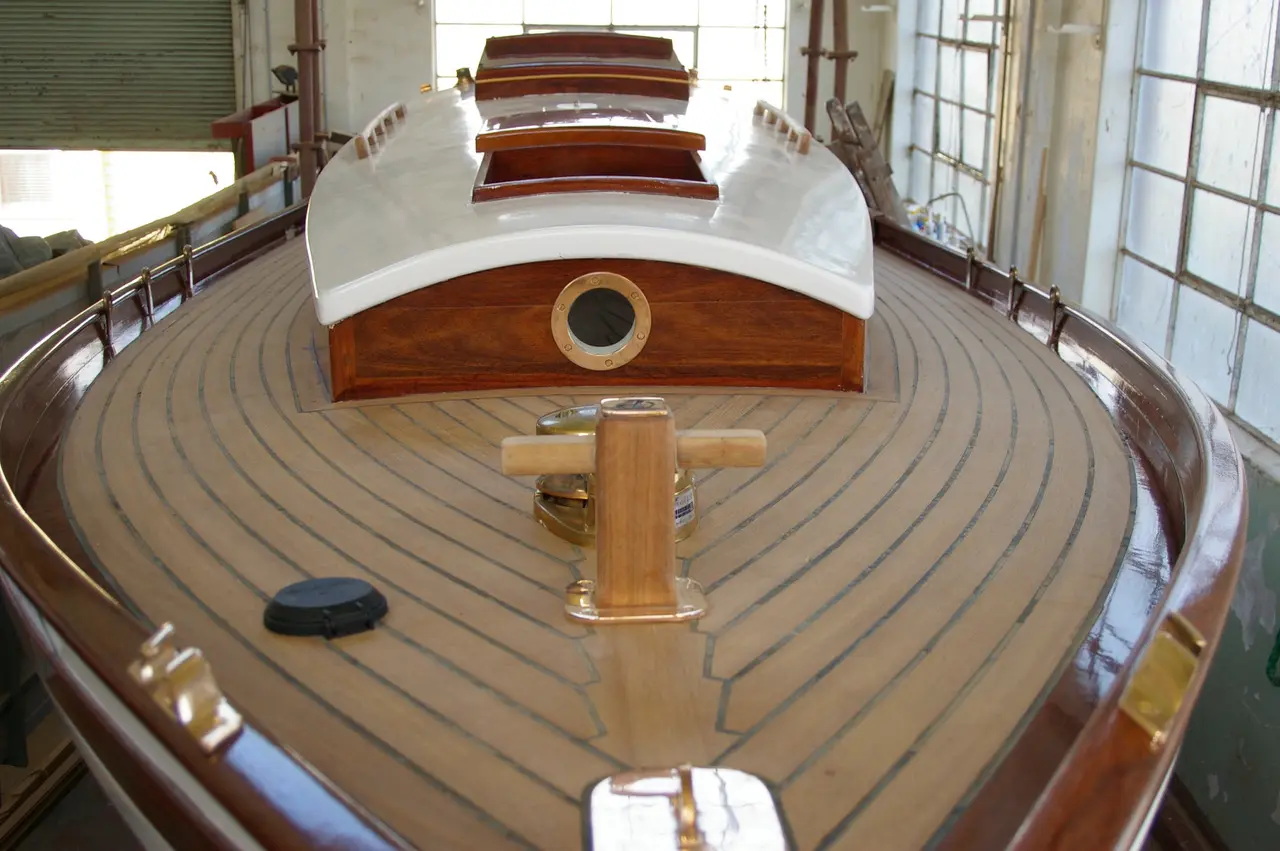
Training in boat building traditionally comes in the form of apprenticeships. There are also a number of formal boat building and shipwright’s courses available at a various colleges throughout Australia, including at Franklin, Tasmania, not far from where we now live. I have had the benefit of neither formal, nor informal tuition to prepare me for my task. The nearest I came to an apprenticeship, and I consider it as such, was my regular purchase of the American “Wooden Boat” and the UK “Classic Boats” magazines. During the ten years or so that I have been reading these magazine there are not many things nautical that have not been covered. A Hobart marine surveyor, boat builder and designer came to Trafalgar to carry out a mid-construction survey of my project – to confirm that I was on the right track, or put me back on the right track if I wasn’t. Generally I was, and he gave me his tick of approval. He asked where I had learnt boat building, and I told him of my subscriptions to “Wooden Boat” and “Classic Boats”. He replied that I could do a lot worse. Having spent my working life in the building industry as an architect, and, in the words of one of my builders “hangin’ round with tradies” also helped. One of the best of the builders I worked with did his apprenticeship in boat building, and it showed. He said that if you can do it on a boat, you can do it anywhere. His lesson was to build the project in its entirety in your head before you even pick up your tools. You can then anticipate, and resolve problems before they occur, and work consistently towards a vision of the final product. I’ve taken the advice to heart, but I still had to solve many problems as they came, some of which crept up from behind when I least expected them.
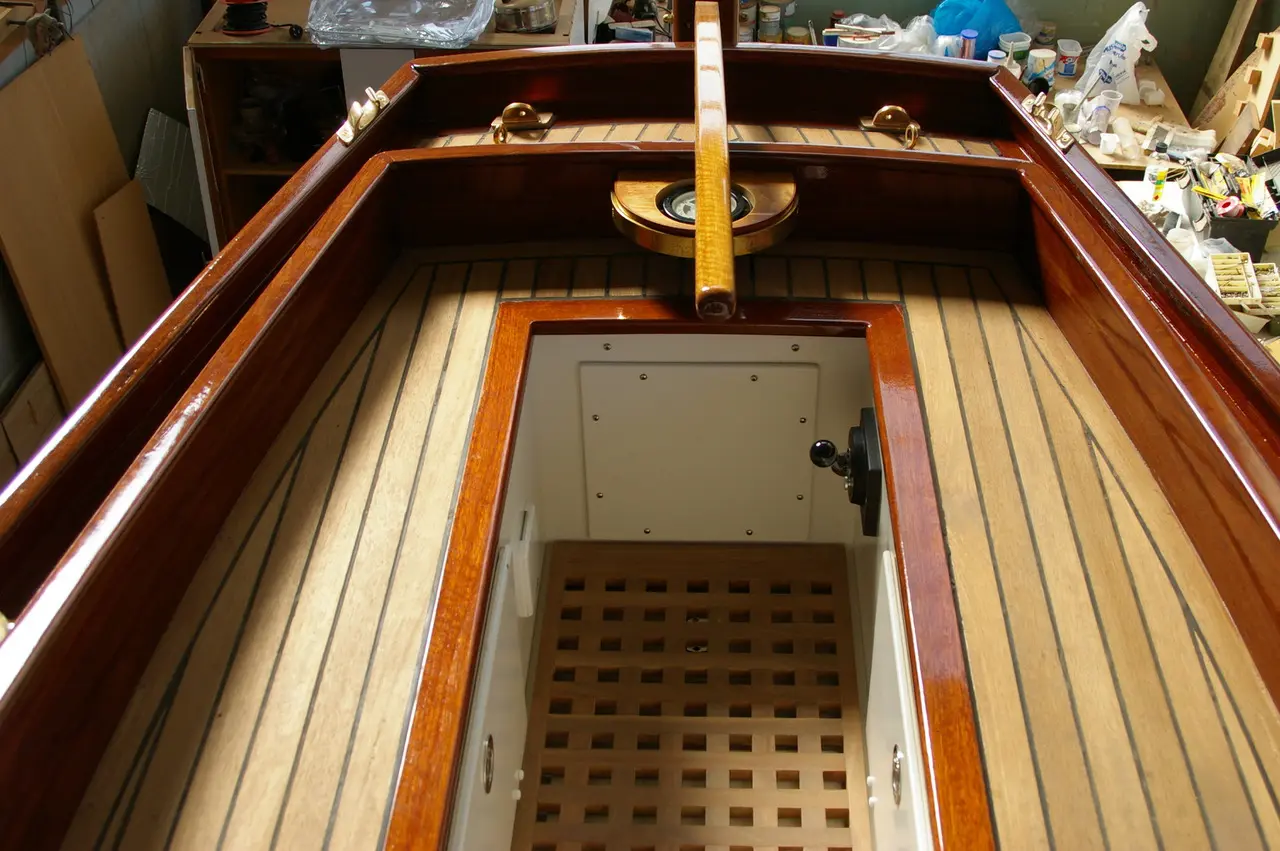
A friend, a yachtsman and an expert in electronics, offered/asked if he could do the electrics and electronics on my project. It’s a big task, and a major component of safety at sea. If I hesitated for a nanosecond, neither he nor I noticed. The systems he designed and installed were discreet and elegant, and have remained trouble-free and easy to use for the past many years of active service. He also produced a detailed, illustrated manual that has enabled me to understand the systems, and deal with any issues.
There were no mentors as such, but there was support from amongst others Tim Phillips from the Wooden Boat Shop in Sorrento, owner of “Storm Bay”, an historic Hobart ketch which he has now fully restored. Another supporter was Steve Pompeii, of the Pompeii family of boat builders in Mordiallock, Victoria. A Pompeii boat is a highly regarded, solid, traditionally built boat. Steve showed me how caulking was done, and checked that I had done it right. He cast a critical eye over progress from time to time. The other name that comes to mind is the above-mentioned Bud McIntosh, boat builder, designer, and author of my particular bible; “How to Build a Wooden Boat”. The book is a good read, full of excellent illustrations, and as close to a step-by-step guide as I found. I took heart from one of his comments that “there are a hundred ways to build a boat, and every one is right.” He also said that two big mistakes can be more traumatic than five small ones. I aimed for the five small ones.
L. Francis Herreshoff was a noted yacht designer like his father and author of one of the classics of American sailing literature,” The Compleat Cruiser”. One of his gems: “SIMPLICATE AND ADD LIGHTNESS”.
I don’t know what “simplicate” means, but if it alludes to a simpler way of building a boat, I am sure I never found what it might be. As to adding lightness, my choice of timbers didn’t help. At the lower scale of density of commonly used timbers in boat building lies Huon Pine, at 520kg/cu.m. Spotted Gum, used in both the hull frames and structural parts of the fitout, as well as much of the finished interior work is 970kg/cu.m. Grey Ironbark, used in keel and stem, is in the region of 11-1200kg/cu.m. and the planking, Afrormosia, is 7-800kg/cu.m. The structural sub-deck timber (used under an overlay of Teak) is Tallowwood, chosen for its durability and density and weighs in at about 1000kg/cu.m. These are all heavy timbers, and I might have been on the lookout for a finishing timber that would have “added lightness”. Marine plywood would have done it, and marine ply is now a high quality product. But there is no ply in Vertue V153. It seemed inconsistent to use a product that would not originally have been used in a boat of this heritage. My choice of finishing timber was instead Jarrah, at 820kg/cu.m. I have used Jarrah extensively in my architectural projects, for its rich red colour, its durability, and beautiful grain. It is moderately stable, fairly easy to work and was reasonably readily available. Unlike Spotted Gum, it glues well. This was used in the cabin trunk; transom; bulwarks; cap rails; coamings and in some of the highlight timbers within the cabin. It didn’t disappoint, but it didn’t add lightness either. Getting towards the end of the project, I had some concern that I would be exceeding the design weight of 5 tonnes. This consideration lead to one of the compromises that I made (saved for the end of the project); I decided to use an aluminium mast, in lieu of timber, which would have been my preference. As well as adding lightness aloft, it saved another few months in the boatshed, and I was keen by then to see the water. As it turned out the final weight, measured as the travel lift put her in the water, was just under 5 tonnes. A timber mast would have been OK, even allowing for a fully laden boat, ready for extended cruising.
My two predecessors on the project I felt had the motto: “Make it perfect”. I adopted as my motto: “Make it perfect, but make it happen.” I didn’t make it perfect, but I did see the completed project exit the shed, and into the water at the completion of the 39 year build.
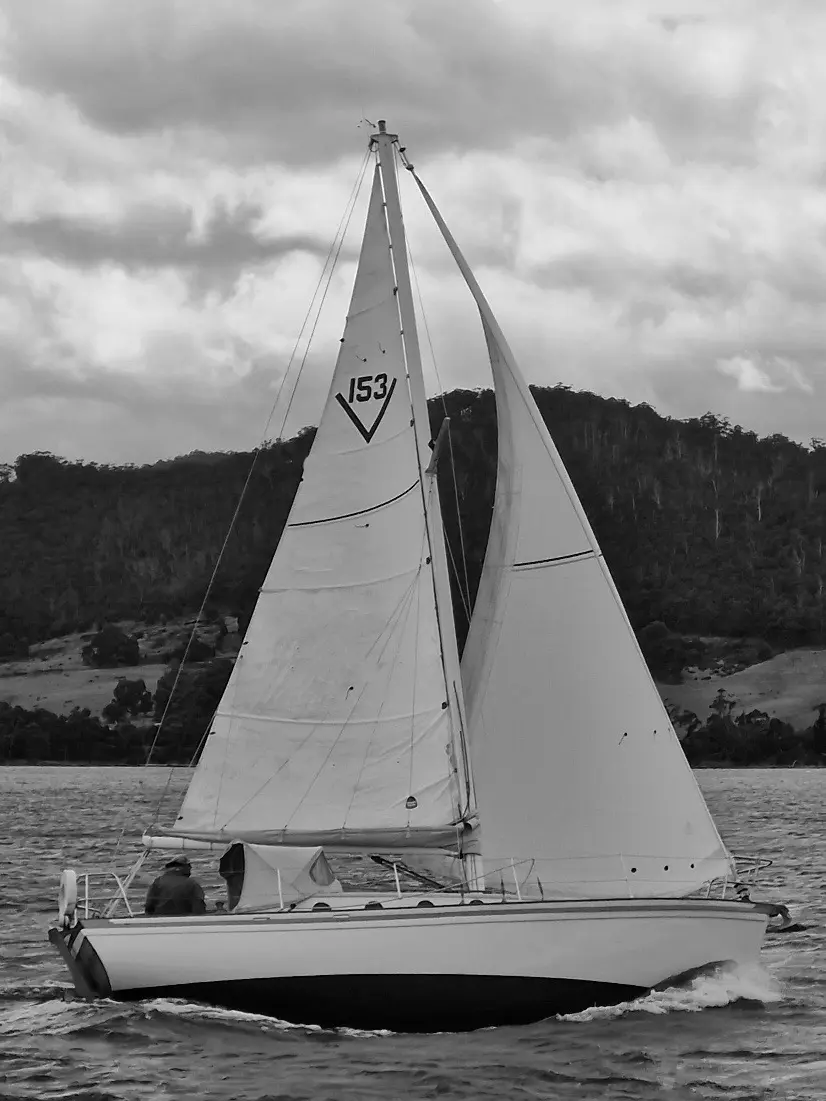
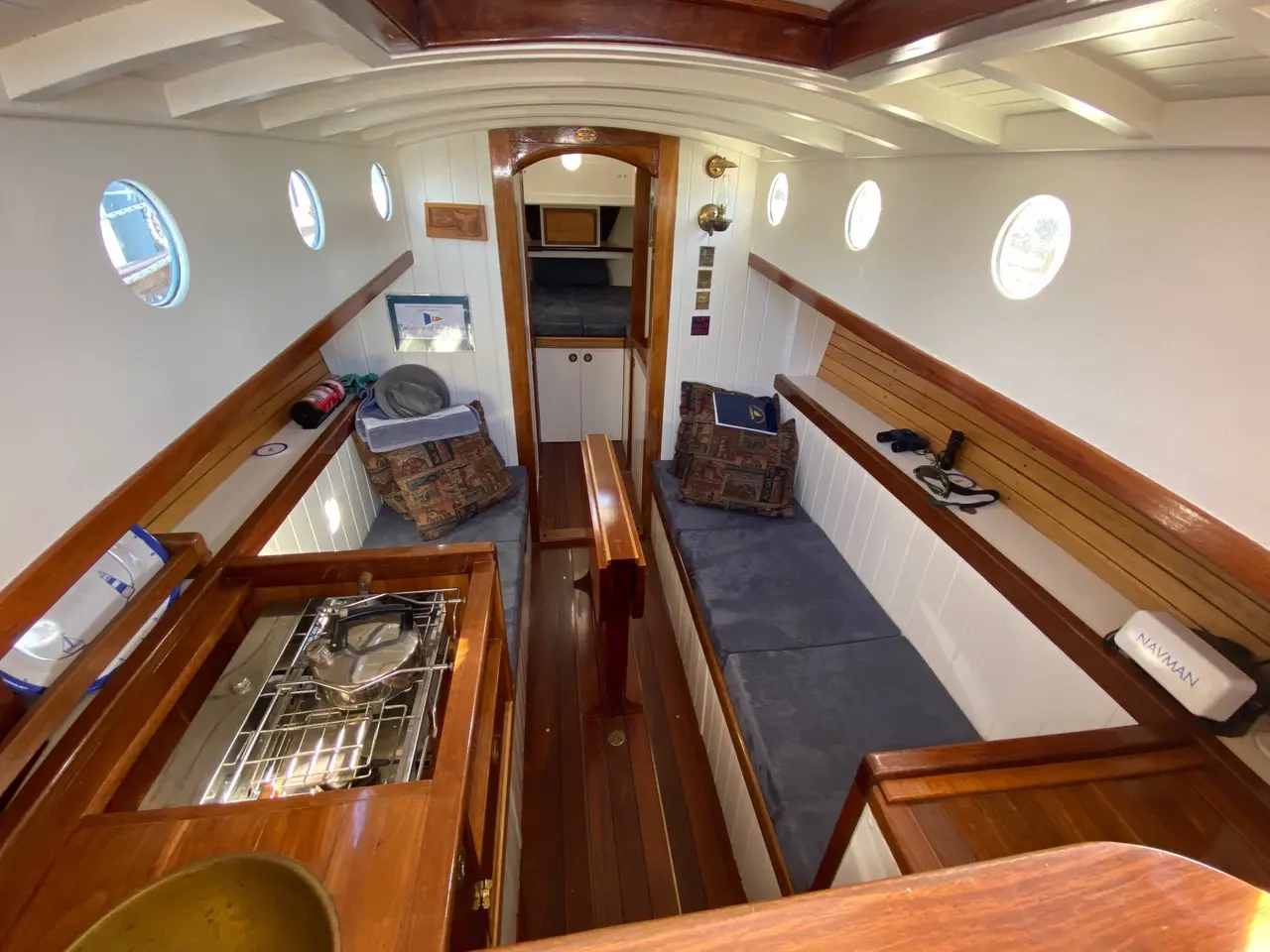
By late October 2009 she was ready for launching. My wife Veronica had completed the upholstery, her task for the previous few months. These include cushions with a lighthouse motif, of fabric that had been purchased for indeterminate purpose several years previously. Perfect! I had by this time come to know V153 as PATIENCE OF THE HUON (Patience is a virtue; patience is in major demand for a project taking forty-odd years to complete, and “Huon” reflecting her future home). More low loader, more crane, more crews of men, and more money (now in lesser supply), and she exited her home of seven years. First stop was Yaringa, a marina on the tidal, mangrove laced shores of Westernport Bay for her first taste of water. From there across a potentially challenging Bass Strait to southern Tasmania and the Huon River where we now live.
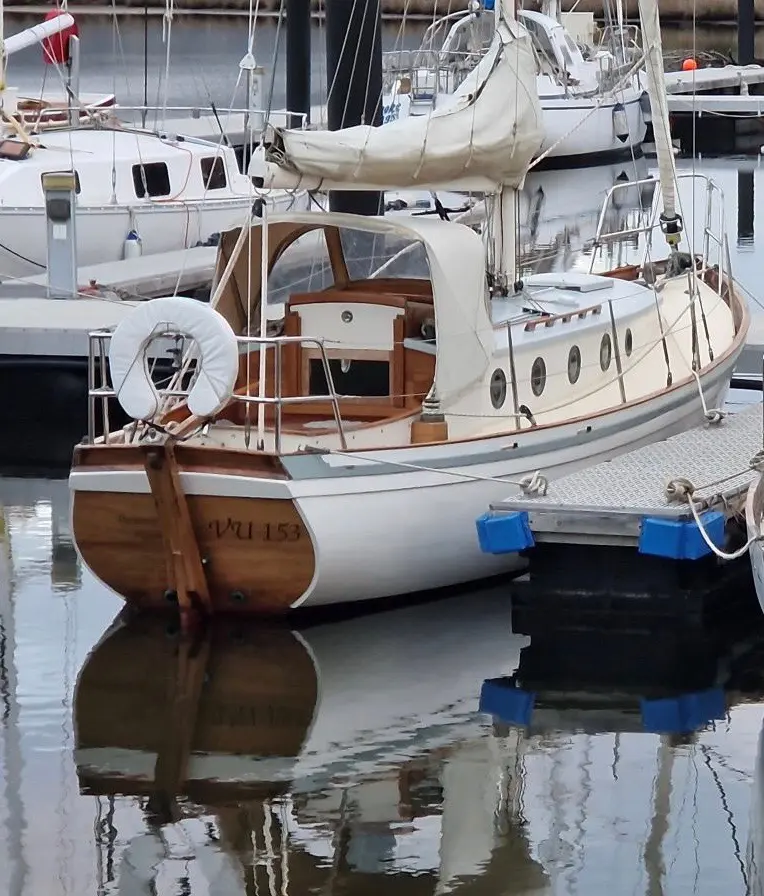
PATIENCE OF THE HUON berthed in the local marina five minutes from home.
____________________
The Stern Locker
As we now seem to have shaken down into a regular seagoing system of four editions of the Newsletter each year, I am going to have to put together some sort of index before too long. The ‘Design Dynasty’ article, above, is the eighth in the series, and the previous ones appeared as follows: July 2022: September 2022: March 2023: June 2023: October 2023: August 2024: Autumn 2024. After reading about the Wanderer Class it might be amusing to see what was written about the original Wanderer III, and her relationship to other designs in the ‘Dynasty’. (Please see October 2023.)
I cannot sign off this edition of the Newsletter without mentioning the ‘significant birthday’, at 75 years old, of the very special Vertue Wellow Maid. Built over many years to the pre-war Monie drawings, she is one of the prettiest early Vertues with her low freeboard and short, well cambered coachroof which makes her easily recognizeable. Her owners Richard and Marion Heming kindly sent us this photograph of the boat enjoying her birthday celebrations in Yarmouth, Isle of Wight.
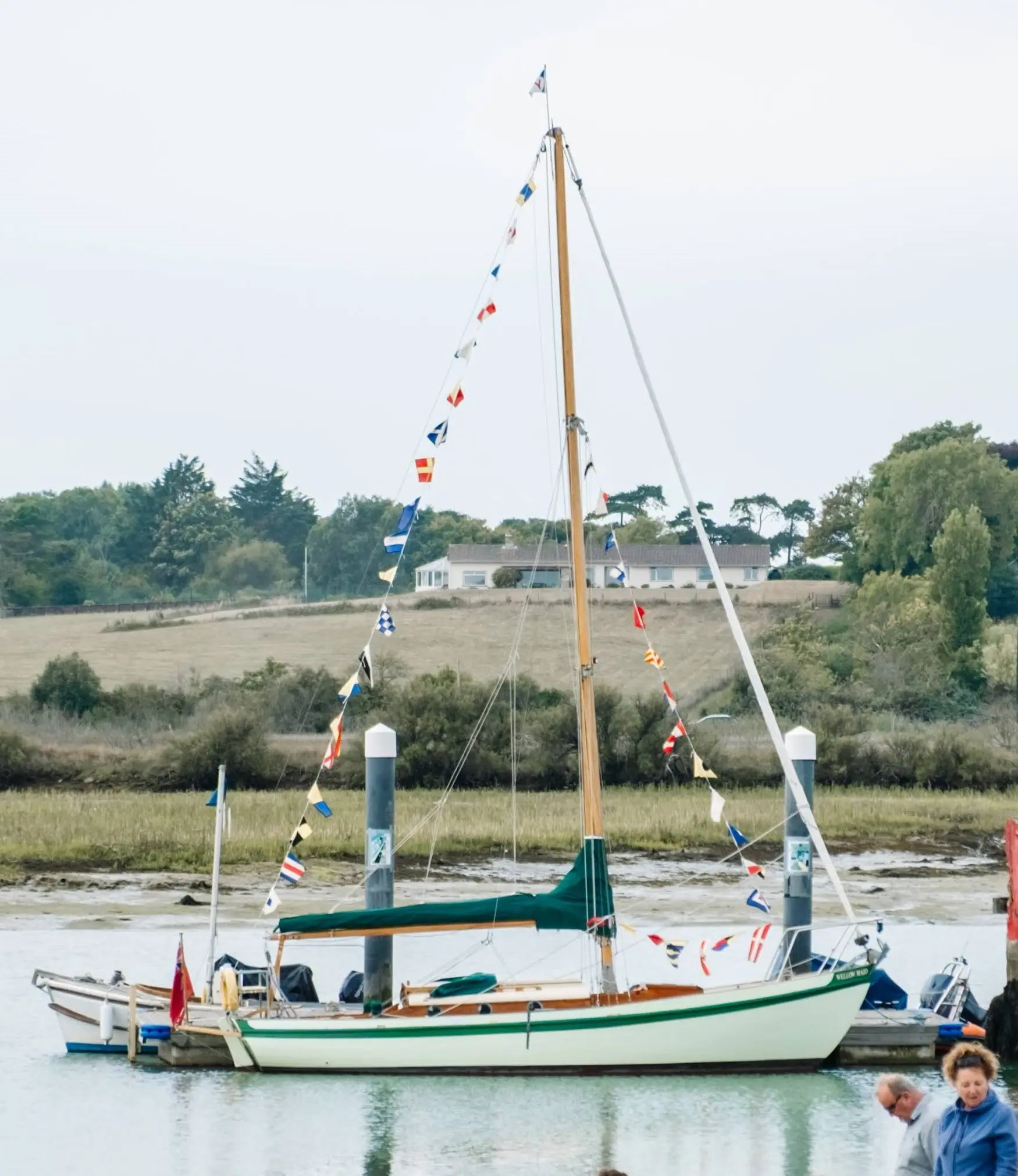
Wellow Maid enjoyed her 75th. Birthday Party!
Please keep your Vertue News coming and I’ll try and put it all together for you by Christmas!
Fair Winds and Following Seas,
Roger
_________________________